
Truffles - The forgotten roots: a journey through traditions, nature, and family relationships


The film “Trifole – The Forgotten Roots” IN CINEMAS FROM OCTOBER 17, directed by Gabriele Fabbro, is much more than a simple cinematic tale: it is a hymn to the rediscovery of traditions, family roots, and a love for the land, themes of profound relevance now more than ever. Set in the enchanting hills of the Langhe, a territory known for the precious White Alba Truffle, the film captivates the viewer with a narrative that intertwines personal emotions and universal messages.
A hymn to the rediscovery of traditions and family love
“Trifole” celebrates the rediscovery of roots, reminding us of the importance of passing on cultural and family heritage from generation to generation. The plot, which sees Dalia return to the Langhe to help her grandfather Igor, becomes an opportunity to explore how local traditions can be a tool to reconnect with one’s identity. Nature, in this context, is not just a setting, but a true character that reflects the care and respect humans should have towards it. This film invites us to preserve the historical memory of places and relationships, which are guardians of increasingly forgotten values.
Landscape change and environmental impacts
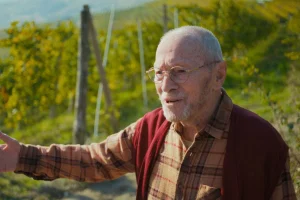
The radical transformation of the landscape in recent decades. Grandfather Igor’s remark, bitterly reflecting on environmental changes (“So many vineyards, so many machines. This used to be all forest…”), highlights how urbanization and the expansion of intensive agricultural activities have reduced wild spaces once rich in truffles. The disappearance of trifole is not only an economic loss for the territory, but a sign of how the balance between man and nature has been broken, exacerbated by climatic events such as lack of rain. This context brings with it human tensions, such as jealousy and violence among truffle hunters, willing to do anything to maintain control over the last fertile areas.
Myth and reality: Jupiter and the birth of truffles
In a particularly evocative moment, the film evokes the mythology of Jupiter’s lightning bolts which, according to ancient legends, give birth to truffles when they strike the earth. This element, in addition to adding a touch of magic and mystery to the narrative, underscores the deep connection between ancient mythology and the natural world. The search for truffles thus becomes not only an economic matter, but a journey into mystery and the invisible. In a world where science dominates thought, the spiritual and mythological dimension of nature remains alive in popular beliefs, and the truffle is a symbol of this ancestral connection with the earth.
A family bond inspired by personal experiences
The relationship between the protagonists Dalia and Igor is touching and reflects the deep family bond, inspired by director Fabbro’s personal story with his own grandfather, who suffered from Parkinson’s. The physical and emotional distance between grandfather and granddaughter reflects themes of incommunicability and regret, but also the desire for reconciliation. In a sense, the film is a love letter to the director’s grandfather, a way to overcome the pain of loss and honor his memory. This universal theme of grief and regret blends perfectly with the narrative of truffle hunting, an activity that requires patience, respect, and connection with nature, just like the deepest family ties.
The economic power of truffles and human corruption
One of the key themes of the film is also the economic opportunity offered by the sale of the precious fine white truffle, a symbol of wealth and prestige in the culinary world. Igor hopes that finding a large truffle can save his home and his connection to the land, but this hope is threatened by human wickedness. Competition among truffle hunters becomes fierce, with envy and violence emerging. This reflects how greed and moral corruption can prevail over values such as respect and community, making evident the fragility of the balance between man and nature, but also between men themselves.


Conclusion
“Trifole – The Forgotten Roots” is a film that invites reflection on our connection with the land, family, and traditions. Through its engaging narrative and the breathtaking landscapes of the Langhe, the film offers us a perspective on how local culture and nature can be resources to protect, both emotionally and economically. At the same time, it warns us of the consequences of human greed and encourages us to seek reconciliation with ourselves, with our history, and with the world around us.
THE ITALIAN TRAILER: Youtube Link
TRIFOLE – The Forgotten Roots is realized with the contribution of the PR FESR Piemonte 2021-2027 – Piemonte Film TV Fund call, with the support of Film Commission Torino Piemonte and key institutions of the Langhe: Torino Piemonte Film Commission, the Municipalities of Alba and Somano, the Langhe Monferrato Roero Tourism Board, the Alba Fair Board, the National Truffle Study Center, the Alba Traders Association, the Barolo Barbaresco Alba Langhe Dogliani Consortium, the Piedmontese Cavour Regional Enoteca, and the Radici Foundation.