
What is precious black truffle, how to use it, and how to store it.
Périgord Black Truffle, Tuber Melanosporum Vittadini, is likely the most well-known truffle in international cuisine. The diamond of truffles.
The Périgord Black Truffle has a globose shape with a brownish-black rind and reddish-black flesh, furrowed by clear, thin, and highly branched veins. The Périgord Black Truffle is considered the most prized among the different varieties of Black Truffle and has an exquisite flavor that becomes more evident after cooking.
Let’s discover together what it is, how it is used and cleaned, and when its harvest season is.
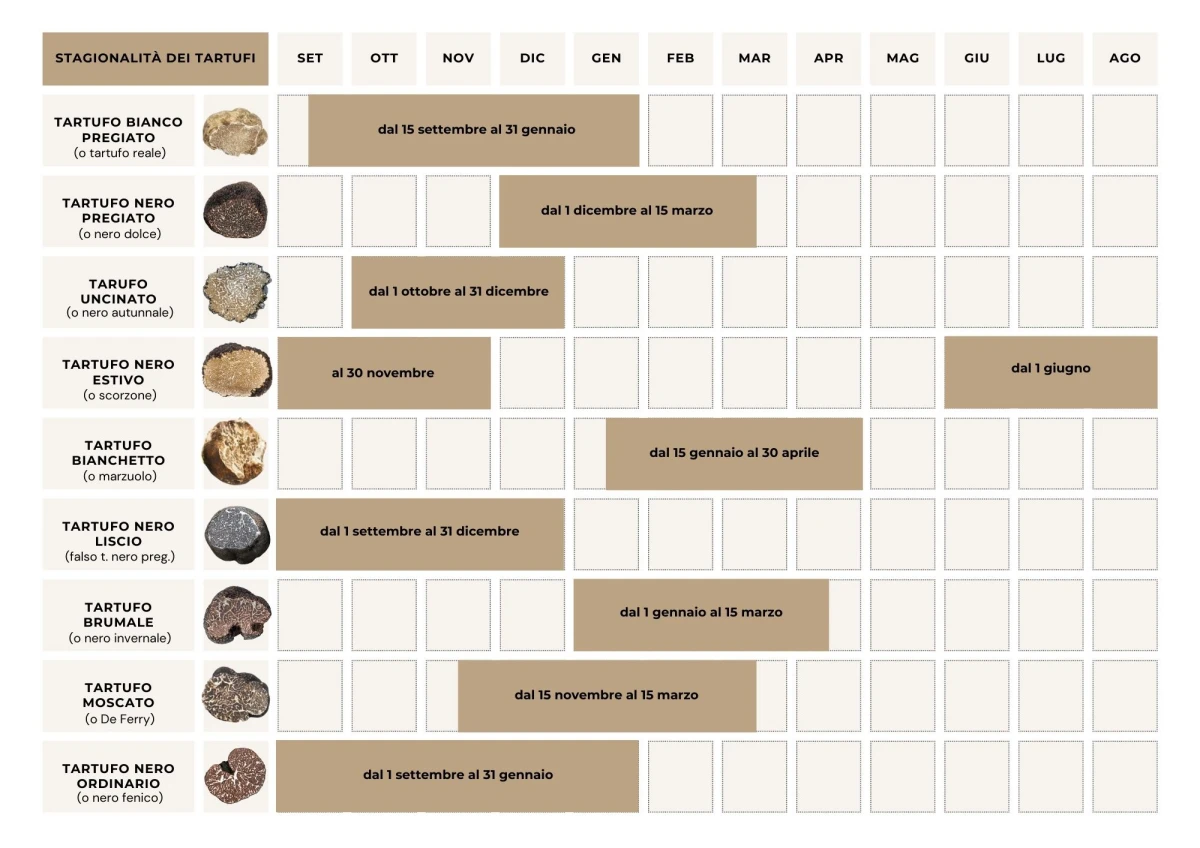
The harvest takes place from December 1st to March 15th.
Recommended use of the Périgord Black Truffle
The Périgord Black Truffle is also excellent raw, but it is usually consumed after brief cooking and can be used as an ingredient in:
- appetizers,
- first courses,
- main courses,
- sauces and creams,
- soups,
- side dishes,
- desserts,
- pizzas,
- and even cocktails.
As you may have gathered, it is very versatile compared to other truffle varieties.
Visit our recipe blog to discover traditional and innovative ways to cook and use the Périgord Black Truffle in the kitchen.
How to store the Périgord Black Truffle

The truffle should be stored in a glass jar or, alternatively, in an airtight plastic container. Inside, it should be wrapped in a sheet of paper towel, which should be changed daily.
We have written an article where we explained in detail all the ways to store truffles.
How to slice the Périgord Black Truffle
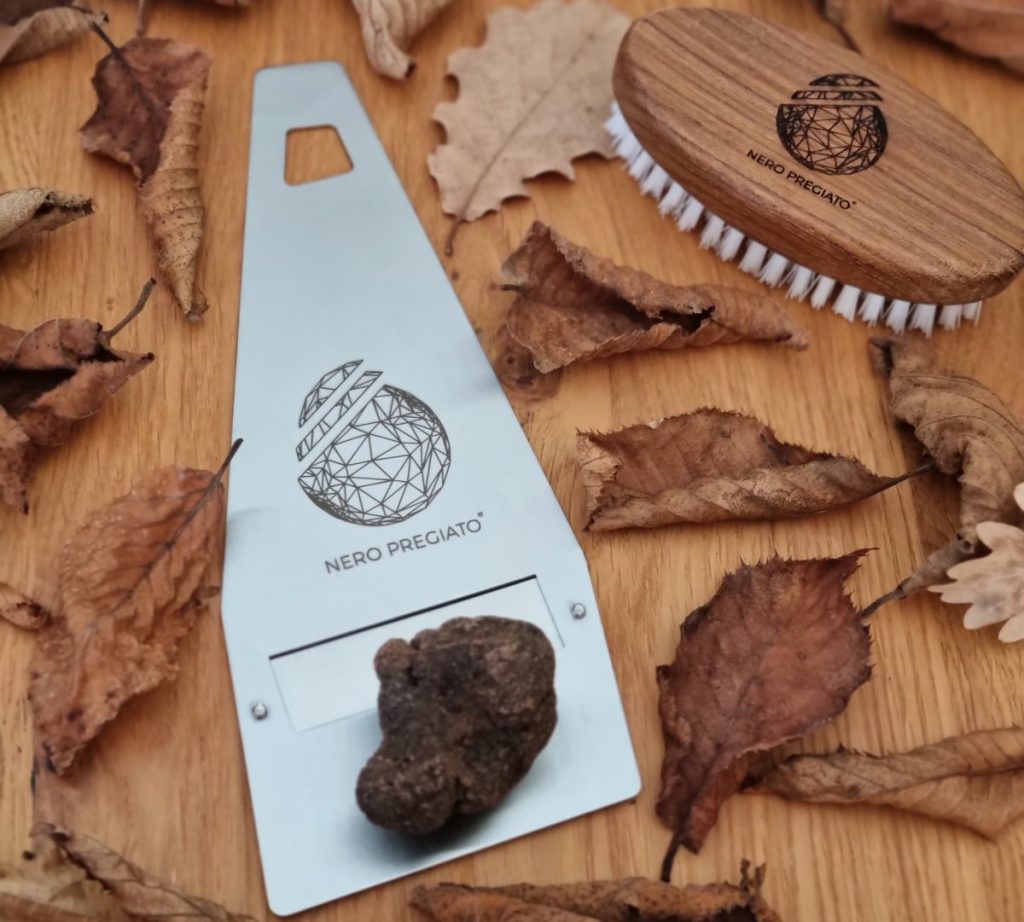
The tool designed for this operation is the truffle slicer. There are several types on the market: the important thing is that it is equipped with a sharp blade, so it is better to choose a quality one.
How to clean the Périgord Black Truffle
Our fresh truffles are sold already well-brushed of excess soil. We do not wash them because this process could compromise their shelf life. You simply need, a few hours before serving or using it as an ingredient, to clean it gently and thoroughly with a soft brush under lukewarm running water.
Read: How and when the Périgord Black Truffle should be cleaned
Common name: Périgord Black Truffle
From “melanos” and “sporum” = black spores (Vittadini 1831).
- CARPOPHORE: Mostly rounded in shape, but sometimes irregular and lobed if it grows in rocky soil; the size is variable, reaching the dimensions of a potato.
- PERIDIUM: Warty surface, with pyramidal warts with depressed tips of intermediate size (3-5 mm) that strongly adhere to the gleba. The color of the peridium is black, sometimes with ferruginous zoning; in immature specimens, it tends toward wine-red.
- GLEBA: Black-brown, tending toward violet or reddish. The veins are whitish, dense, and slender, with well-defined outlines and accompanied by two translucent brown bands on the sides.
- AROMA: Aromatic, distinctive, not too pungent, delicate, pleasant.
- FLAVOR: Exquisite, so much so that it is called the “sweet black” truffle.
- ASCI: Rounded, sometimes with a short stalk, 90-140 x 80-120 µm, containing 4 to 6 spores, but also just one.
- SPORES: Initially opaque, then dark brown, elongated elliptical or ovoid in shape, 30-55 x 20-35 µm, and the surface is equipped with short, rigid spines.
- SYMBIONT PLANTS: Downy Oak, Holm Oak, Sessile Oak, Hop Hornbeam, and Hazel.
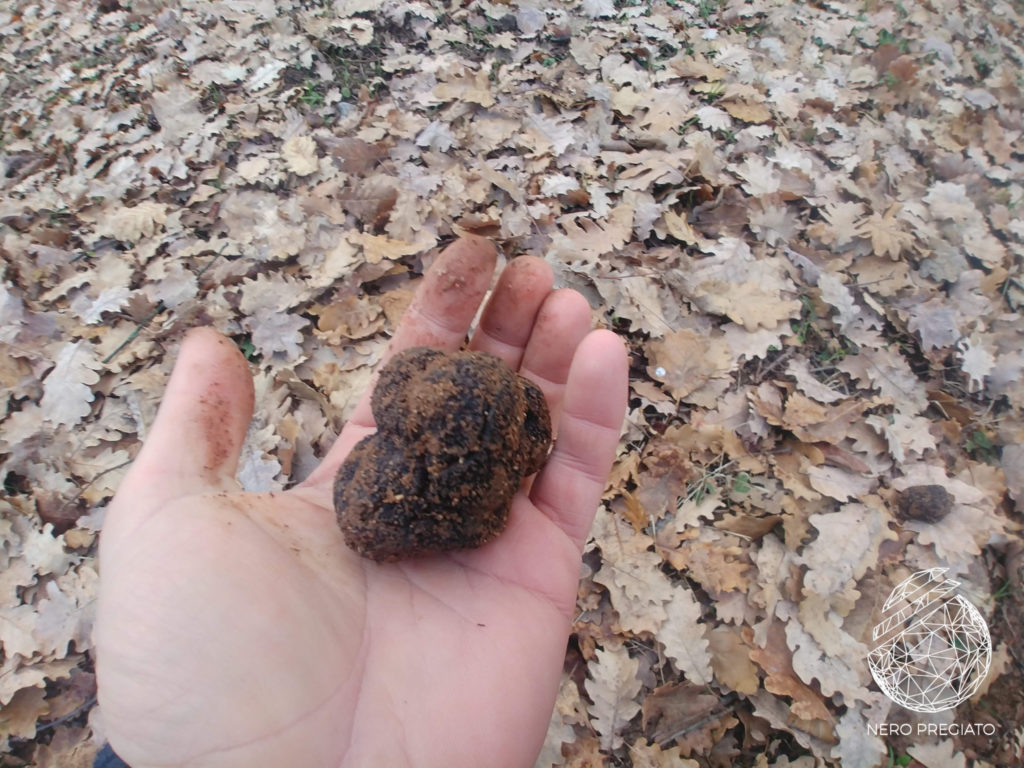
Périgord Black Truffle in my truffle ground

Claudio Morati
Visionary entrepreneur, communicator, and enthusiast of the world of truffles.
I am the creator of the NERO PREGIATO brand and my mission is to reveal the underground world of the Truffle: a universe of excellence, tradition, territory, and sustainability that too often remains hidden. As a visionary and passionate entrepreneur, I have been committed for years to spreading the culture of this precious and mysterious fruit so that it can be understood and valued in its entirety.
The Périgord Black Truffle (Tuber Melanosporum) is the diamond of truffles: the most aromatic variety, with an intense yet delicate scent and an exquisite flavor that explodes after cooking, making it the undisputed protagonist of international cuisine. With NERO PREGIATO, I carry forward the goal of making it known and appreciated even outside of fine dining.
Through this Blog and Events, I guide you to discover the cultural roots and the territory that give life to this excellence, because knowing the origins of the Truffle is the first step to appreciating its true nature, loving and enjoying it to the fullest.