
Desert truffle?

The desert truffle is a fascinating, mysterious product little known in Europe, but deeply rooted in the culture and gastronomic tradition of many populations in North Africa and the Middle East. Although its name recalls the more famous Italian black and white truffles, the truth is that it is a completely different product, both in appearance and organoleptic characteristics.
This hypogeous fungus, belonging to the genus Terfezia, grows in extreme environments where life seems impossible: scorching deserts, sandy soils, and very scarce rainfall. Yet, it is precisely there that this “son of lightning”, as the Bedouins poetically call it, hides.
Where do desert truffles grow?
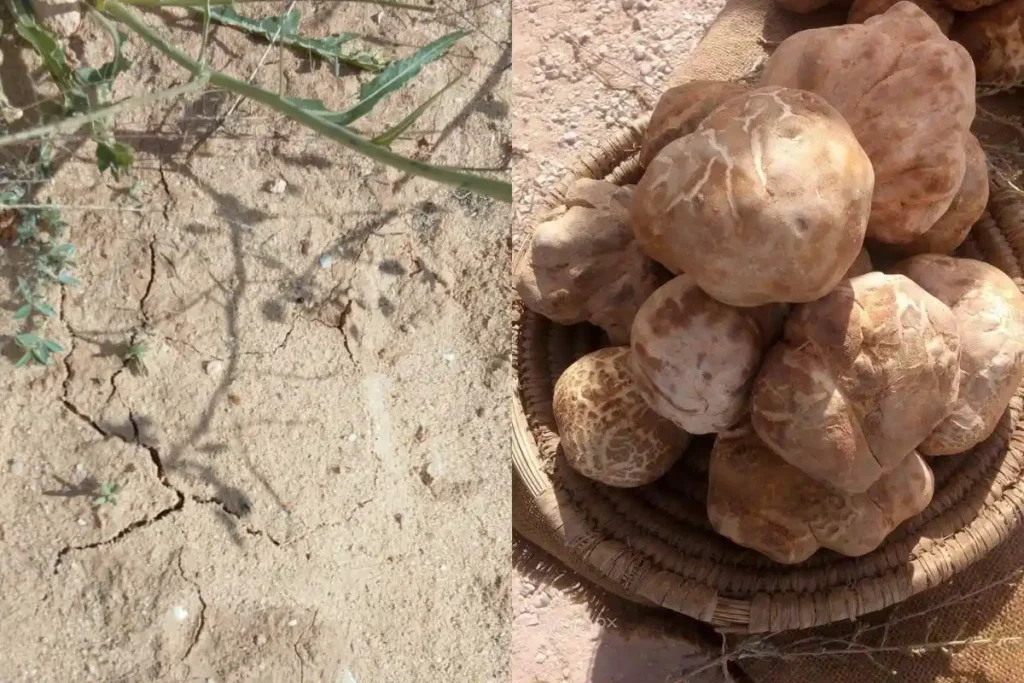
Unlike the Italian truffle, which grows in damp woods in symbiosis with oaks, holm oaks, and hazelnut trees, the desert truffle grows in sandy soils after rare winter rains. The most well-known regions for harvesting are:
- Saudi Arabia
- Syria
- Qatar
- Algeria
- United Arab Emirates
Even in specific areas of Sardinia, wild varieties of terfezia can be found, although they are not harvested commercially.
(The term “truffle” also commonly refers to terfezias, which belong to the Terfeziaceae genus and are known as desert truffles. These fungi are endemic to the desert and semi-desert regions of countries located in the Mediterranean basin and are highly prized).
A look all its own
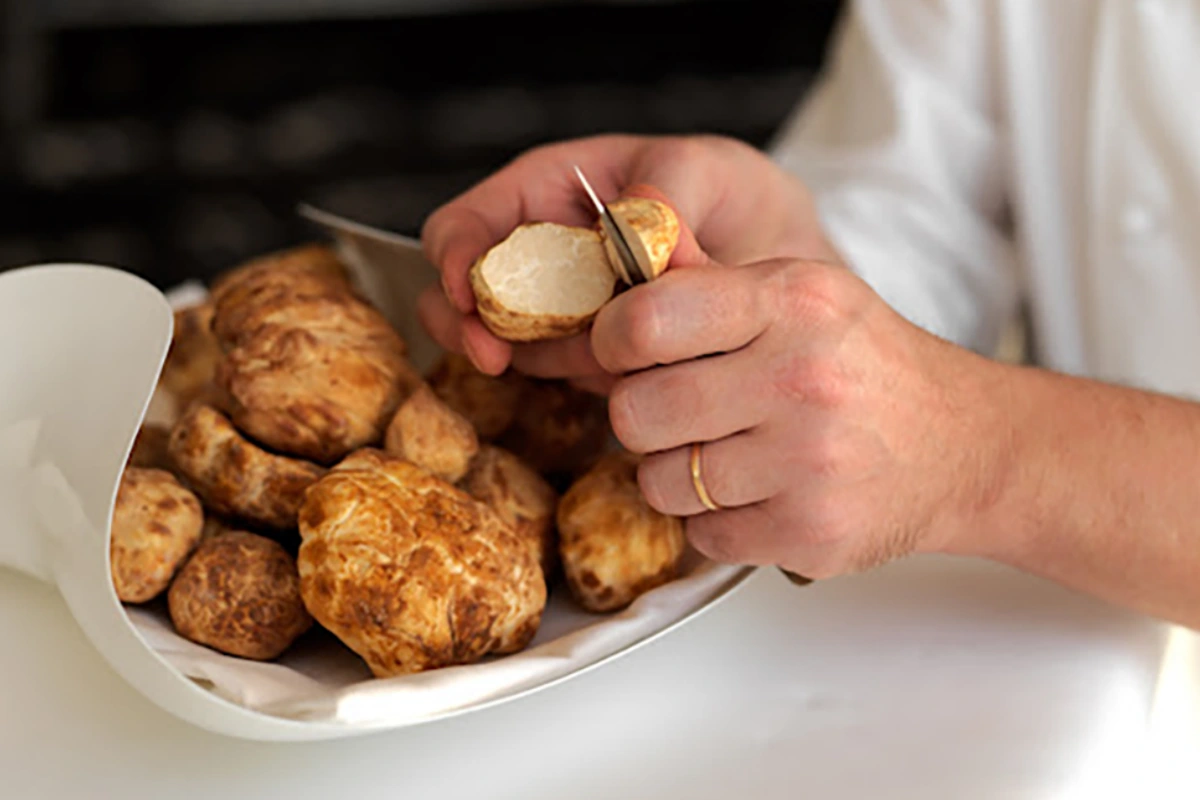
The desert truffle has a round and smooth shape, often compared to that of a potato. The outer skin is light-coloured, tending towards yellow or reddish, while the inside is milk-white. Unlike Italian truffles, its scent is very delicate, almost neutral, and the flavour is mild but pleasant, especially after cooking.
How it is harvested
One of the most fascinating aspects of the desert truffle is the harvesting method. No trained dogs, no specific spades: harvesting is done with the naked eye, observing swellings in the sandy soil after the rains. Experienced harvesters can recognize the signs and dig delicately to avoid damaging the fungus.
The perfect season runs from November to March, when temperatures are milder and humidity allows the mycelium to develop.
Recipes and local traditions
In Middle Eastern cuisine, the desert truffle is a precious ingredient, often linked to memory and family tradition. The ways to cook it are simple but tasty:
- Stewed with vegetables (potatoes, carrots, onion)
- Grilled and seasoned with spices
- Served in tagine with goat or lamb meat
- Sliced with traditional sauces like tahini or, curiously, even with mayonnaise
The flavor intensifies with cooking, making it an excellent accompaniment to rustic and spicy dishes.
Desert truffle vs. Italian truffle: the differences
The comparison between desert truffle and Italian Black Truffle is inevitable, but they are two completely different products. Let's look at the main differences:
| Characteristic | Desert Truffle | Precious Black Truffle |
|---|---|---|
| Habitat | Sandy desert | Damp woods |
| Harvesting | By sight, without dogs | With trained dogs |
| Flavour | Delicate, not very aromatic | Intense, fragrant |
| Price | €20-30/kg | From €1,200/kg and above |
| Use in cooking | Rustic, traditional dishes | Haute cuisine, gourmet |
❗ Beware of imitations: the desert truffle is not a valuable white truffle
Despite a vaguely similar external appearance, the desert truffle has nothing to do with the precious Italian white truffle (Tuber magnatum Pico). Some dishonest sellers might take advantage of this visual similarity to falsify its identity, passing it off as a high-quality truffle at inflated prices.
The desert truffle has completely different organoleptic characteristics, a much lower market value, and cannot in any way be equated with European truffles. For this reason, it is essential to buy from specialized retailers, such as our shop www.tartufoneropregiato.it, to avoid unpleasant surprises and receive only authentic and guaranteed truffles.
A rare but increasingly sought-after product
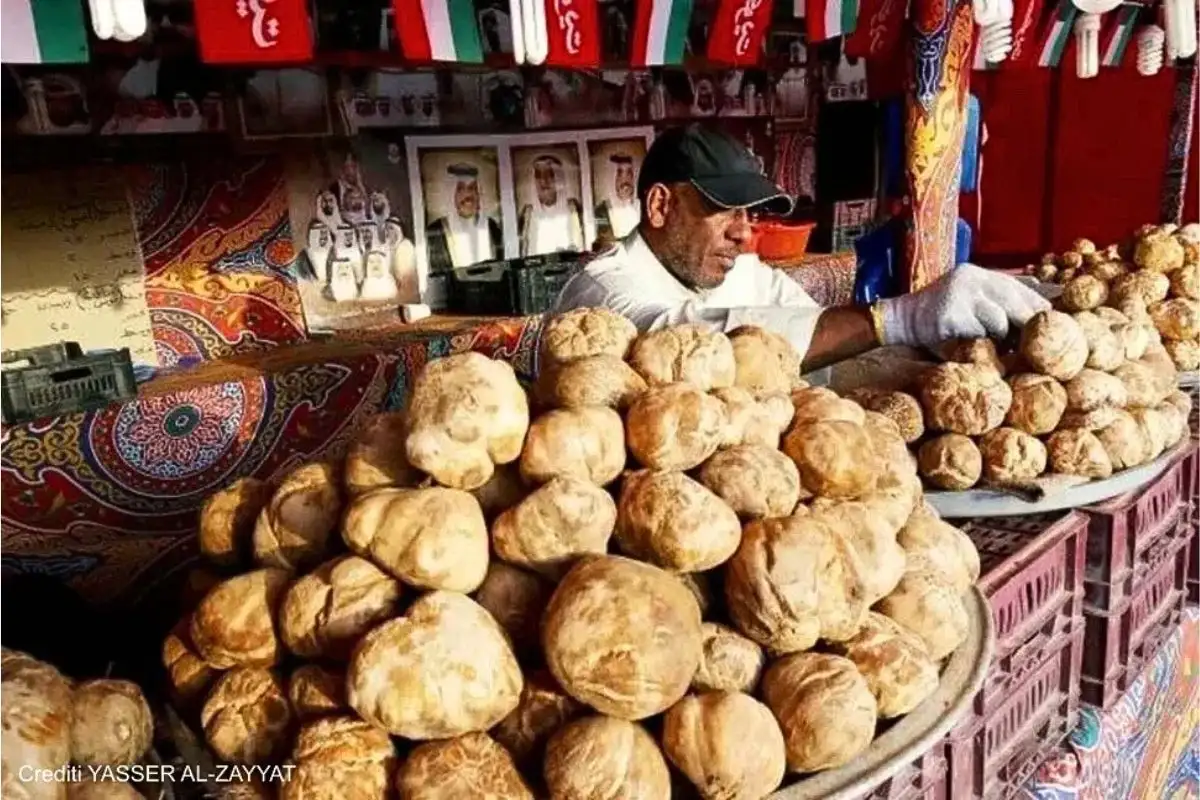
Although its commercial value is significantly lower than our truffles, the desert truffle is increasingly in demand in local markets and some international cuisines. What makes it so interesting is not only its exotic origin or cultural charm, but also the relative ease of harvesting in large quantities, especially after winter rains.
During favourable seasons, entire families can harvest tons in a few hours, making it an easily accessible product, sold by the kilo in local markets and often used in family and popular culinary contexts. This balance between availability and tradition makes it a unique and sought-after food in many regions of the Middle East and North Africa.
Even in Dubai, the desert truffle is very popular: it is sold in local markets and even celebrated on social media by local royal families.
Conclusion
The desert truffle is a little-known ingredient but rich in cultural and culinary significance. It does not have the aromatic power of Italian truffles, but it carries with it a millennial history, made of deserts, sudden rains and childhood memories.
A true treasure of nature to discover and rediscover, to enrich knowledge and respect for the many varieties of the truffle world.