
The misuse of Bismethylthiomethane

If you're wondering what exactly Bismethylthiomethane is, well, let me explain it simply: it's artificial truffle aroma.
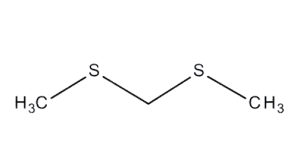
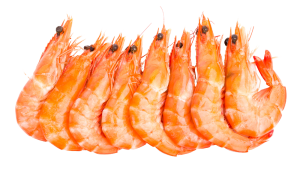
But be careful, it's not as artificial as you might think. This chemical compound, derived from petroleum, is also naturally found in truffles, along with other aromas, albeit in varying quantities. You can even find it in the heads of shrimp. A curious detail, isn't it?
My obsession with Bismethylthiomethane has deep roots. Every time truffles are discussed, especially in less "high-end" contexts, this compound relentlessly comes into play. And I'll tell you a secret: I can't stand it!
Too many, far too many truffles and derived products, to be more palatable and appreciated by the public, continue to be excessively saturated with this compound, beyond the limit of decency. It's better to call it consumer fraud.
Over the second millennium of the common era, the landscape of establishments offering food and drinks has significantly expanded. However, I regret to note that many of them can no longer distinguish themselves and strive to find new identities to avoid being classified simply as restaurants.
The restaurant sector and related fields are often not managed by true professionals. We must be honest: good intentions and enthusiasm alone are not enough. Not even an elegant corporate visual identity, perhaps designed by a renowned architect, guarantees success. It is essential to have specific expertise in the catering sector to operate successfully.
My knowledge of the truffle world has led me to reject "with truffle" dishes from restaurateurs and "truffle" products on the market. There are rare occasions when I push myself to verify and test these "restaurant" establishments, which I call traders. Recently, I had a culinary experience that made me seriously reflect on the abuse of this ingredient, and that is why I am committed to spreading knowledge about artificial truffle aromas. It was a quiet evening, looking for a new place to eat, and we stumbled upon a newly opened establishment with a somewhat undefined proposal. But nothing exceptional, just the usual mix of food and drinks.
The food was decent: sandwiches with quality cold cuts and cheeses, artisanal beers that flowed well, and service that, despite a few yawns, worked. However, there was something off.
The critical moment came with a simple cheese board. The ricotta, theoretically a delight, had been rendered unbearable by the excessive Bismethylthiomethane. A "truffle" smell so strong you could smell it meters away. And the accompanying truffle honey was equally disgusting, covering every trace of its original flavor.

Not even using one hundred grams of an authentic precious white truffle can achieve the same olfactory impact.
Don't take us for fools!
Looking from the outside, what stands out in the ricotta is a normal Tuber Aestivum Vittadini, also known as Scorzone, a modest hypogeum fungus that, even at the peak of its maximum fragrance in summer, should never emit such a perplexing odor.
The real olfactory catastrophe comes with the truffle honey
Reaffirming my right, guaranteed by Article 21 of our constitution, to express my opinion freely, I state unequivocally that truffle honey should not even exist. That's enough. My reasons? Well, imagine tasting an excellent wine by putting it in soup. It's practically an insult to the senses, a total olfactory catastrophe.

Let's start with the fact that honey, like olive oil, is fortunate enough to already be endowed by Mother Nature with a complex of aromas and flavors that need no improvement. There are literally hundreds of varieties of honey available, each with its distinctive scent and taste characteristics. It's a real pleasure for the senses, a true gustatory training.
The same goes for olive oil. If you ask a professional oil taster, they will enthusiastically tell you about the subtle pleasure of distinguishing the various flavors and aromas present in the oil…
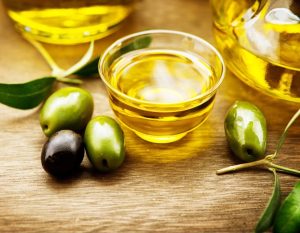
I wonder: why ruin excellent oils and honeys with this compound? Why mask genuine flavors with such an invasive addition? And above all, why do we continue to reward establishments that behave in such a dishonest way?
The problem is not just ethical, but also gustatory. This sensory abuse devalues the true quality of ingredients, replacing it with a mask of artificiality and deception.
Use the right word: high-quality oils and honeys with Bismethylthiomethane (not truffle…), only to then hide it behind the "aromas" label, written in characters so small as to be almost illegible? Or the increasingly rare mention "flavors of xxxx"?
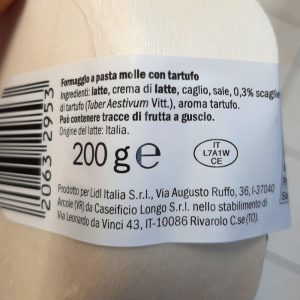
And yet… both in this undefined establishment, as well as in others, this practice continues to perpetuate itself, often ignored by both customers and, even more seriously, by those who manage the place, too often unaware of what is actually served on the tables (or on the cutting boards…).
Returning to the evening in question, the truffle honey accompanying the cheeses was simply unbearable, a true olfactory catastrophe, so intensely permeated by a (pseudo) truffle aroma that it even covered the taste of the honey. In the mouth, only chaos reigned, a fake-truffle scent so pervasive that it overwhelmed every other perception, even the gustatory one of the honey.
How sad is the lack of professionalism on the part of those who manage these places, and even sadder is to see customers who, by their presence, reward such places.
In conclusion, Bismethylthiomethane has become my small obsession, a fight against the general indifference of both proprietors and customers. It's time to expose this practice and bring authenticity back to our dishes.
But I want to delve deeper into this issue. It's not just a matter of taste, but also of health. The excessive use of this chemical compound could have negative consequences on our health. And let's not forget the environmental aspect: the extraction and production of Bismethylthiomethane can have a significant impact on the ecosystem.
Furthermore, the economic aspect must be considered. Consumers deserve to get what they pay for: quality food, genuine and free from tricks and deception. The food industry should not profit from deceiving consumers, but should instead promote transparency and quality.
And let's not forget the role of education and awareness. Consumers must be informed about the ingredients in their food and must be able to make informed choices. Food service managers, on the other hand, must be responsible and aware of the impact of their choices on others.
In short, the abusive use of Bismethylthiomethane is a complex problem that goes beyond the simple aspect of taste. It is a matter of health, environment, economy, and transparency. And it's time to address it seriously, to ensure a better future for all of us.