
Differences between Fine White Truffle and Bianchetto

The season of the summer black truffle has come to an end, with summer truffles bidding us farewell until next summer, while the autumn truffle season begins, featuring its undisputed star: the Tuber magnatum Pico, the fine white truffle! Fine white, Alba white truffle… many names for one unmistakable flavor.
Whatever name it is known by, this variety marks the beginning of the new annual truffle cycle after summer. From this moment, the truffle year restarts, beginning with the fine white truffle season, followed by other varieties.
The season of the fine white truffle, the king of truffles, is finally arriving, bringing with it the rich, unmistakable fragrance that characterizes this prized hypogeal fungus. But what is the difference between the fine white truffle and the Bianchetto truffle (also known as Marzuolo)? If you are a truffle enthusiast or want to learn more about how to use these delicacies in cooking, you are in the right place.
The truffle season: when to look for fine white and Bianchetto truffles
One of the simplest ways to distinguish these two varieties is to know their harvest period. The fine white truffle in Lombardy is harvested between October and January, while the Bianchetto truffle has a later season, from January to April. This temporal distinction is fundamental for those approaching the world of truffles, helping to avoid confusion when buying or eating truffles in restaurants.
Clearly distinguishing the different varieties and knowing the harvest seasons of each truffle is fundamental, also helping to avoid scams, deceptions, and trickery from certain merchants and restaurateurs.
How to recognize fine white truffle and Bianchetto truffle
From a visual point of view, the fine white truffle has an irregular shape and can reach considerable sizes, while the Bianchetto truffle is smaller and has a generally regular shape. The color is also a useful indicator: the fine white truffle tends to be straw yellow with brownish nuances, while the Bianchetto truffle has a rusty or brownish color.
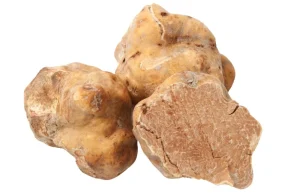
Tuber magnatum Pico
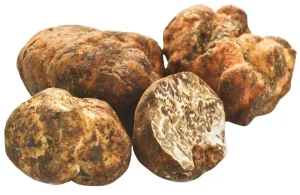
Tuber borchii
The gleba of the Bianchetto truffle also helps distinguish it from the fine white truffle: this variety has a darker color, which becomes even more intense with maturation. The gleba of the fine white truffle, on the other hand, shows shades ranging from gray to hazelnut brown, even reddish. The internal veins also represent a distinctive element: in the fine white truffle, they are thin and well-defined, while in the Bianchetto truffle, they are thicker and irregular.
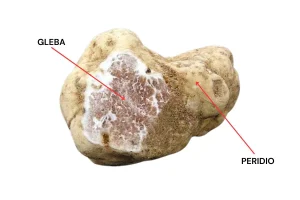
The art of using truffles in cooking
If you are looking for inspiration on how to best use truffles in cooking, one of the most popular recipes is for tagliolini with truffles and how to dress them. This simple yet elegant pasta dish enhances the truffle flavor without overpowering it. It is important to remember that the Bianchetto truffle has a more intense flavor, so it should be used sparingly, while the fine white truffle has a more delicate aromatic profile and can be used in larger quantities.
The aroma and flavor of truffle: a subtle but decisive difference
One of the main differences between these two varieties lies in their aroma. The fine white truffle has a delicate and aromatic scent somewhat reminiscent of Parmesan cheese, while the Bianchetto truffle has a more pungent fragrance and a flavor reminiscent of garlic. This means that if you decide to prepare a truffle sauce, the Bianchetto truffle might be more potent and mask other flavors, thus requiring a lighter hand during use.
Habitat and growth
The fine white truffle and the Bianchetto truffle also differ in the plants with which they associate. The Bianchetto prefers dry soils and links with species such as cedar, downy oak, hazelnut, as well as umbrella pines and maritime pines; it grows both on hills and plains, sometimes even above a thousand meters. The fine white truffle, on the other hand, prefers sloping, year-round moist, well-ventilated soils rich in calcium and potassium. It develops in symbiosis with trees such as oaks, poplars, hazelnut, willows, black and oriental hornbeams.
Price differences between fine white truffle and Bianchetto truffle
The fine white truffle, (Tuber magnatum Pico) has a market price that can vary significantly based on season and size. Currently, prices range between 2,500 and 3,500 euros per kilogram, with peaks that can reach up to 6,000 euros for large, high-quality specimens.
The Bianchetto truffle or Marzuolo, (Tuber borchii), despite being a prized variety, has a lower commercial value compared to the fine white truffle. Its price is on average around 300-600 euros per kilogram, depending on quality and size.
These price fluctuations also depend on seasonal availability and weather conditions that affect harvesting.
Conclusions
Knowing how to distinguish between fine white truffle and Bianchetto truffle is essential to fully appreciate the flavor and aroma these delicacies can add to your dishes. Whether you are looking for inspiration for a corporate dinner, or simply want to add a touch of luxury to your dishes, understanding the differences between these two varieties will allow you to choose the right truffle for every occasion.