
What is Truffle


Truffles are the fruiting bodies of certain hypogean fungi (from the Greek ypo – under and gè – earth), which are globose, rounded, tuber-shaped, and live in symbiosis with the roots of certain plants, such as oak, lime, hazel, hornbeam, and poplar. They are the fruiting bodies of a complex number of filaments (hyphae), which form a complex branching network that extends into the soil, forming the actual body of the hypogean fungus.
BLACK TRUFFLE PLANTS
Downy Oak
The downy oak is the most common oak species in Italy, so much so that in many localities it is simply called "oak". It belongs to the Fagaceae family and is a slow-growing tree.
Scientific name: Quercus pubescens
Higher classification: Oak
Class: Magnoliopsida
Subfamily: Quercoideae
Holm Oak
The holm oak, also called "elce", is an evergreen tree belonging to the Fagaceae family, widespread in Mediterranean basin countries. In Italy, it is native to milder climate zones, where it is also very common in gardens and city avenues.
Scientific name: Quercus ilex
Higher classification: Quercus sect. Quercus
Class: Magnoliopsida
Division: Magnoliophyta
Subfamily: Quercoideae
Turkey Oak
The Turkey oak is a deciduous tree belonging to the Fagaceae family.
Scientific name: Quercus cerris
Higher classification: Oak
Subfamily: Quercoideae
Lime Tree
The Lime Tree is a genus of arboreal or shrubby plants in the mallow family, native to the Northern Hemisphere.
Scientific name: Tilia
Higher classification: Tilioideae
Class: Magnoliopsida
Division: Magnoliophyta
Hazelnut
The Hazelnut is a fruit tree belonging to the Betulaceae family.
Scientific name: Corylus avellana
Extinction risk: Least Concern Encyclopedia of Life
Higher classification: Corylus
Class: Magnoliopsida
Division: Magnoliophyta
Subfamily: Coryloideae
European Hop-Hornbeam
The European hop-hornbeam, also known as hornbeam, ostria, or less frequently, carpinello, is a tree of the Betulaceae family.
Scientific name: Ostrya carpinifolia
Higher classification: Ostrya
Subfamily: Coryloideae
Cistus
Cistus L., 1753 is a genus of small evergreen shrubs or frutices belonging to the Cistaceae family.
Scientific name: Cistus
Higher classification: Cistaceae
Class: Magnoliopsida
WHITE TRUFFLE PLANTS
Pedunculate Oak
The pedunculate oak is a deciduous tree belonging to the Fagaceae family. It is the type species of the genus Quercus. It is the most widespread oak in Europe, and its range is quite vast. This plant is characterized by its considerable size and slow growth.
Scientific name: Quercus robur
Extinction risk: Least Concern Encyclopedia of Life
Class: Magnoliopsida
Higher classification: Oak
Division: Magnoliophyta
Turkey Oak
The Turkey oak is a deciduous tree belonging to the Fagaceae family.
Scientific name: Quercus cerris
Higher classification: Oak
Subfamily: Quercoideae
Sessile Oak
The sessile oak, or rovere, is a semi-deciduous first-magnitude oak belonging to the Fagaceae family.
Scientific name: Quercus petraea
Higher classification: Oak
Class: Magnoliopsida
Division: Magnoliophyta
Downy Oak
The downy oak is the most common oak species in Italy, so much so that in many localities it is simply called "oak". It belongs to the Fagaceae family and is a slow-growing tree.
Scientific name: Quercus pubescens
Higher classification: Oak
Class: Magnoliopsida
Subfamily: Quercoideae
Black Poplar
The black poplar is a tree of the Salicaceae family, native to central-southern Europe, North Africa and western Asian regions.
Scientific name: Populus nigra
Class: Magnoliopsida
Extinction risk: Least Concern Encyclopedia of Life
Higher classification: Poplar
Division: Magnoliophyta
White Poplar
The white poplar, also known as silver poplar, gattice or albera, is a deciduous tree of the Salicaceae family.
Scientific name: Populus alba
Class: Magnoliopsida
Higher classification: Poplar
Division: Magnoliophyta
Aspen
The aspen is a tree of the Salicaceae family.
Scientific name: Populus tremula
Higher classification: Poplar
Division: Magnoliophyta
Goat Willow
The goat willow or pussy willow is a plant of the Salicaceae family.
Scientific name: Salix caprea
Higher classification: Willow
Class: Magnoliopsida
Division: Magnoliophyta
White Willow
The white willow, also called pole willow, is a plant of the Salicaceae family.
Scientific name: Salix alba
Extinction risk: Least Concern (Stable) Encyclopedia of Life
Higher classification: Willow
Division: Magnoliophyta
Lime Tree
The Lime Tree is a genus of arboreal or shrubby plants in the mallow family, native to the Northern Hemisphere.
Scientific name: Tilia
Higher classification: Tilioideae
Class: Magnoliopsida
Division: Magnoliophyta
European Hop-Hornbeam
The European hop-hornbeam, also known as hornbeam, ostria, or less frequently, carpinello, is a tree of the Betulaceae family.
Scientific name: Ostrya carpinifolia
Higher classification: Ostrya
Subfamily: Coryloideae
Hazelnut
The Hazelnut is a fruit tree belonging to the Betulaceae family.
Scientific name: Corylus avellana
Extinction risk: Least Concern Encyclopedia of Life
Higher classification: Corylus
Class: Magnoliopsida
Division: Magnoliophyta
Subfamily: Coryloideae

Truffles belong to the class of Ascomycetes, order Tuberales, genus Tuber. They reproduce through spores, cells a few tens of microns in size, present in large numbers within the gleba (flesh). They complete their life cycle entirely underground, living in mycorrhizal symbiosis with certain higher plants.
It has a fleshy mass called the "gleba", covered by a kind of rind called the "peridium". It is composed in high percentage of;
- water,
- fibers,
- mineral salts,
- organic substances supplied by the tree with which it lives in symbiosis.
The shape depends on the characteristics of the soil in which it develops: soft soil will favor the growth of a spherical truffle,
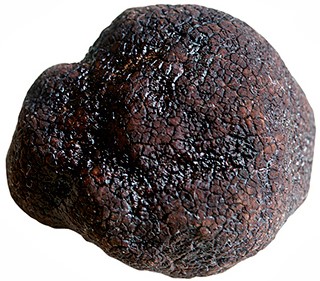
while hard, stony soil with many roots will favor a bumpy shape.
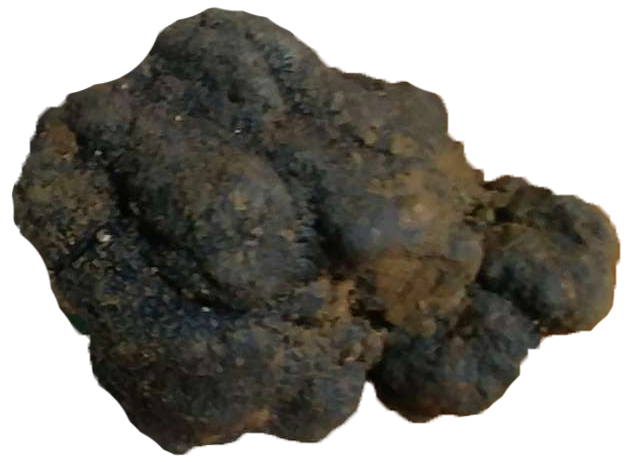
The truffle is also to be considered a real "environmental sentinel": In fact, it does not tolerate pollution or anything else harmful to nature.
They are formed by an external wall (rind or peridium) of varying thickness, with the typical color and appearance of the species, and an internal part (flesh or gleba) of varying color and traversed by veins that delimit alveoli in which the asci, containing the spores that have a reproductive function, are immersed.
TRUFFLE BIOLOGICAL CYCLE
The production of the precious fruiting body is linked to symbiosis with arboreal or shrubby plants. The exchange of substances between the two partners (the truffle and the plant) occurs at the root level in particular formations called mycorrhizae, structured in a characteristic way for each species.
Mycorrhizae are a kind of sleeve formed by several layers of septate tubes called hyphae; these interweave and surround the tips of the terminal rootlets of the tree and, penetrating between the first levels of root cells, form a network: it is through this bond that the plant offers the fungus various substances, receiving mainly water and mineral salts in return. Many hyphae then branch off from the network, spreading through the soil in search of nutrients.
The hyphae together are called the mycelium. In due course, i.e., when all the necessary environmental conditions are met, some hyphae interweave and give rise to the formation of the fruiting body, in whose gleba the spores differentiate. It is precisely the spores, germinating, that will give rise to a new mycelium that will be able, by joining with the young root tips, to form new mycorrhizae.
Unlike epigean fungi, which develop fruiting bodies above ground, hypogean fungi cannot use air currents for spore dispersal.
Evolution has therefore endowed them with a strong odor, perceptible only when the spores mature, which attracts insects and mammals, which, by feeding on the truffle, ensure the dispersal of the spores.

WHAT TRUFFLE SPECIES EXIST?
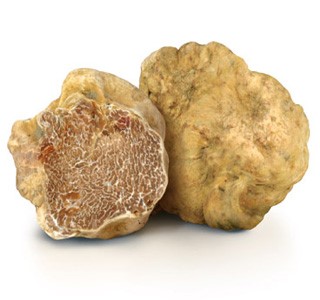
Precious White Truffle
Tuber Magnatum Pico
Harvest period: from September to January.
The white truffle is considered the truffle par excellence, its aroma is unmistakable. Among truffle species, it is certainly the most precious.
Serving suggestions: ideal for appetizers, first courses, meat or fish main courses, eggs. Use only raw.
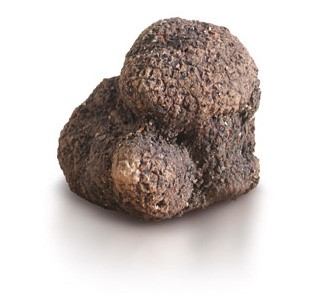
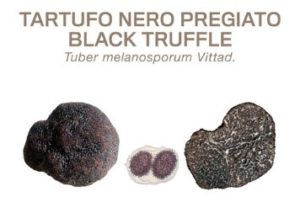
Precious Black Truffle
Tuber Melanosporum Vittadini
Harvest period: from December to March.
Also known as Norcia truffle, Spoleto truffle, or truffe de Perigord by the French. After the white truffle, it is considered the most prized commercially and is one of the protagonists of international cuisine. It has a black rind and a dark interior with white veins.
Serving suggestions: ideal for appetizers, first courses, meat or fish main courses, eggs, and desserts. Tolerates short cooking times.
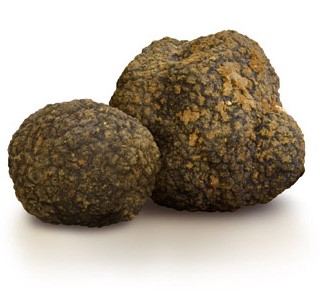
Black Hooked Truffle
Tuber Uncinatum Chatin Vittadini
Harvest period: from October to January.
It belongs to the same species as the summer truffle, but its aroma is stronger. The exterior is black, and the interior is hazelnut-colored.
Serving suggestions: ideal for appetizers, first courses, meat or fish main courses, eggs.
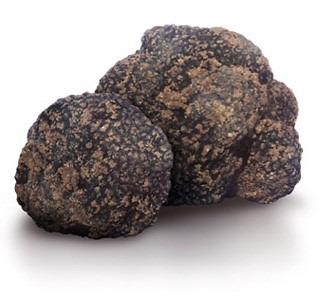
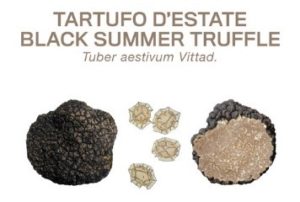
Summer Black Truffle
Tuber Aestivum Vittadini
Harvest period: from May to August.
The summer truffle or "scorzone" is very similar to the hooked black truffle. Among truffle species, it is the most widespread. Its unmistakable aroma is sweet, pleasant; its taste delicate.
Serving suggestions: ideal for appetizers, first courses, meat or fish main courses, eggs.
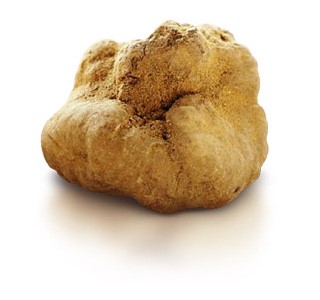
Bianchetto Truffle
Tuber Borchii Vittadini
Harvesting period: from January to April.
This truffle is known as "marzuolo," given its harvesting period. Its distinctive feature is its strong aroma and decidedly garlicky taste.
Serving suggestions: ideal for appetizers, first courses, and meat or fish main courses.
The most well-known and appreciated species for gastronomic use are: Fine White Truffle (Tuber magnatum Pico), Fine Black Truffle (Tuber melanosporum vittad.), Summer Truffle (Tuber aestivum Vittd.)
-
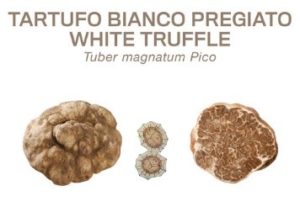
- Fine White Truffle Tuber Magnatum Pico
-
- Fine Black Truffle Tuber Melanosporum Vitt.